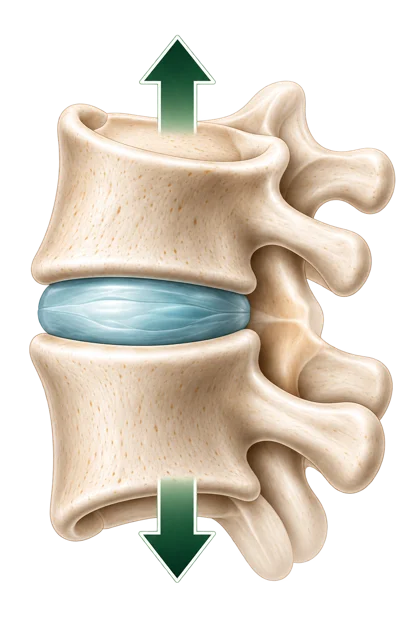
Controlled stretching
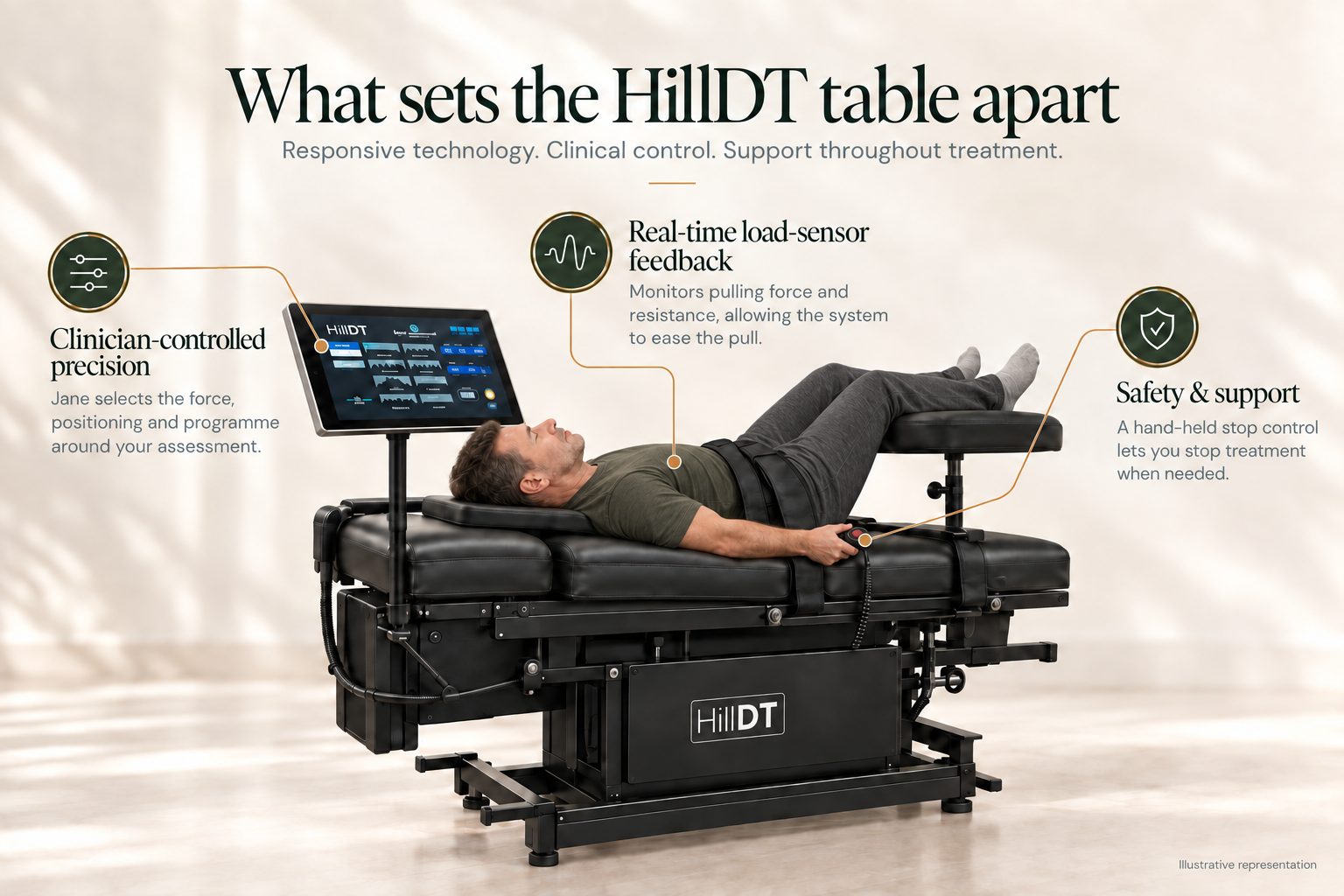
The table applies a gentle, controlled pulling force. This creates space between the vertebrae and reduces pressure on the disc.
Non-surgical spinal decompression
Your first step? Just 30 minutes.
Specific, controlled stretching and release of your lower back or neck. Explore a non-surgical approach to easing pain.
No commitment to a course of treatment.
“Since starting treatment with Dr. Jane, the difference has been absolutely life-changing. I can finally live without constant nerve pain radiating down my leg.”
Sue-Ellen · Google reviewUnderstanding the treatment
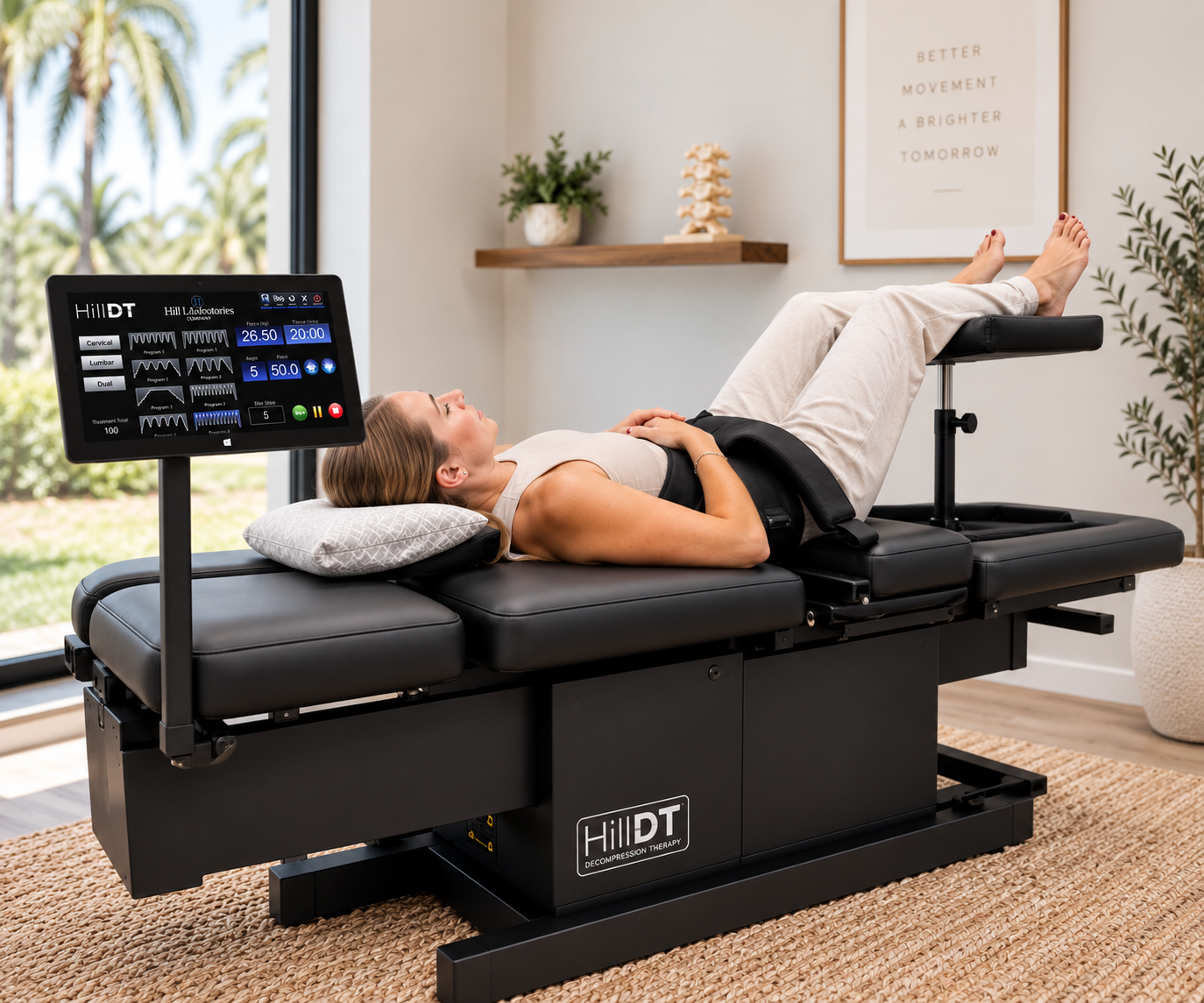
Non-surgical spinal decompression gently stretches and releases your lower back or neck, aiming to reduce pressure on spinal discs and surrounding structures, ease discomfort and improve movement. You remain comfortably supported throughout.
Our HillDT table monitors pulling force and your body’s resistance, easing the pull as resistance increases. Its adjustable programmes and positioning allow treatment to be tailored to you.
Jane’s 18 years of clinical experience guide those settings. She considers your history, examination and relevant imaging to assess suitability, selects your programme and reviews your response—adjusting care around your needs and progress.
What brings you in
Start with an assessment of your symptoms and any existing diagnosis.
These concerns do not automatically make decompression suitable. Jane will assess your individual circumstances and may recommend other care, further investigation or referral. Previous spinal surgery needs particular consideration.
THE SCIENCE
A controlled stretch and release, with you supported on the table throughout. Here’s a closer look at the movement and the proposed effect on the disc.
The table applies a gentle, controlled pulling force. This creates space between the vertebrae and reduces pressure on the disc.
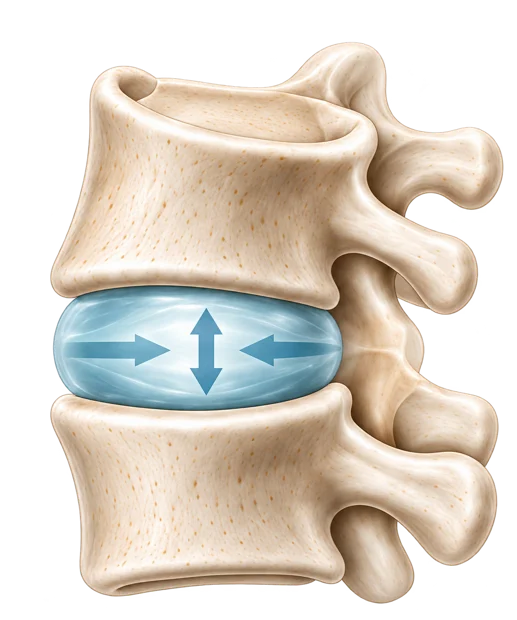
Reducing pressure may help fluid move into the disc, allow some bulging material to move back in, and ease irritation of nearby nerves.
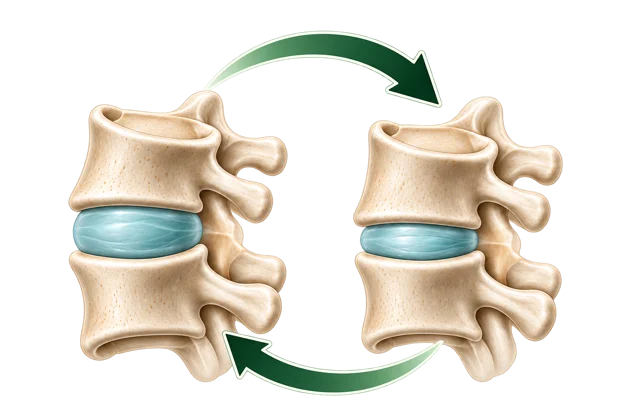
The table alternates between a controlled stretch and a gentler release. This cycle repeats throughout your session, with settings tailored to you.
Illustrations show the proposed mechanism; individual responses vary.
See the movement
Watch the lumbar animation alongside the explanation above.
Jane assesses your symptoms, history and examination findings, alongside relevant imaging where needed, to decide whether decompression is a worthwhile option for you.
If it is, she selects the treatment settings and reviews changes in your symptoms and everyday activities as care progresses. Your response informs whether to continue, adjust the approach or consider another next step.
Your first two visits
The experience, in their words
Patients consistently describe Jane as professional, caring and approachable—with Kate helping create a warm welcome from the moment you arrive.
Google · 50+ reviews
Thorough and clear
“What I really like is how thorough she is and how clearly she explains everything, which always makes me feel comfortable and confident in the treatment.”
Professional and caring
“How lucky am I to have found Jane Hardy—professional, kind, caring, understanding with a good dose of empathy.”
Your history considered
“I highly recommend Jane if you need someone who truly considers your medical history. She always makes me feel comfortable.”
Knowledge and encouragement
“Dr Jane is knowledgeable, encouraging, thorough and most importantly caring.”
Years of trust
“I have been a client for 4–5 years and Jane has supported me through several health challenges with professional care, education and kindness.”
Clear and informative
“Great informative service. Jane is a lovely lady who is always cheerful and does a great job.”
A trusted professional
“Jane and the staff have been welcoming, friendly, caring and professional.”
A positive atmosphere
“Jane and Kate are both so lovely and caring, such a positive vibe every time you walk in.”
A warm welcome
“A special shoutout to Kate at the front desk. She is always so friendly and welcoming.”
Safe, comfortable and confident
“Jane’s knowledge and experience have made me feel safe, comfortable and confident that I’m in great hands throughout the process.”
Selected Google reviews and excerpts. Names are abbreviated for privacy.
See what your visits include →
Dr Jane HardyChiropractor & owner · B.Chiro
Meet Dr Jane Hardy
For Jane, great chiropractic care starts with understanding the person in front of her—what’s troubling you, how it affects your life and what you want to get back to doing.
For Jane, great chiropractic care starts with taking the time to truly understand the person in front of her — how their body is functioning, what may be contributing to their concerns, and what they ultimately want to get back to doing.
Originally from Australia, Jane moved to New Zealand to study at the New Zealand College of Chiropractic, graduating in 2008 and receiving the Clinical Excellence Award. After returning to Australia, Jane and her husband Nigel eventually made the Northern Rivers home, opening Casuarina Chiropractic in 2018.
Jane is passionate about providing thorough, individualised care. She believes people deserve more than a quick fix — they should understand what’s going on, why it matters, and the options available to help them move forward. Her approach combines detailed assessment, chiropractic care and, where appropriate, spinal decompression therapy.
Jane also assesses people considering spinal decompression. She reviews the clinical findings, discusses whether it may be appropriate and remains responsible for the clinical decisions throughout their care.
Away from the practice, family comes first for Dr Jane. She loves spending time with her husband Nigel and their daughters, Eva and Scarlett, and making the most of the active coastal lifestyle they’re fortunate to call home. Being part of the local community — both as a family and through Casuarina Chiropractic — is something she genuinely values.
For Jane, it all comes back to one simple philosophy: understand your body, look after it well, and never underestimate what it may be capable of.
Outside the practice
A little more about the person behind your care.

Jane with Nigel and their daughters, enjoying time by the coast.

Jane competing in HYROX Brisbane, 2026.
Before you decide
Need a practical answer before booking? Call the team.
0498 012 334It may be, but a diagnosis or scan alone does not determine whether decompression is appropriate. Jane considers your symptoms, history, examination findings and relevant imaging before explaining whether it is a reasonable option for you.
Research into non-surgical spinal decompression has reported favourable outcomes for some people with certain spinal and disc-related conditions. As with any form of care, results vary from person to person and the evidence continues to evolve.
In our practice, many patients have reported meaningful improvements in how they feel and what they’re able to do including getting back to activities they love.
Spinal decompression isn’t right for everyone, which is why we start with a thorough assessment to understand what’s going on and determine whether it may be an appropriate option for you.
Want to explore the research? We’ve included links to relevant studies on our website.
Spinal decompression isn't suitable for everyone. Certain conditions including pregnancy, osteoporosis, spinal fracture, some forms of spinal instability, tumours and some previous spinal surgeries or implants may mean decompression isn't appropriate. This is why we complete a thorough history and assessment, and review relevant imaging where indicated, before recommending spinal decompression therapy.
Most people find the treatment comfortable, although individual responses vary and some people may experience temporary changes in their symptoms. Treatment is carefully controlled and adjusted according to your presentation and how you respond.
Possibly. If your problem has persisted despite previous care, a fresh assessment can help clarify what may be contributing, what has already been tried and whether decompression or another pathway is worth considering.
Surgery is a significant decision, so it’s reasonable to understand all appropriate options available to you.
For some spinal and disc-related conditions, non-surgical spinal decompression may be a conservative option worth considering. We’ll assess whether it’s appropriate for you and monitor your progress carefully.
If you’re not progressing as expected, your symptoms worsen, or surgery is considered necessary or time-sensitive, we’ll recommend further medical or specialist assessment.
Our aim is to give you the information you need to make an informed decision about your care.
Not necessarily. If you already have relevant X-rays, CT scans, MRI images or reports, we encourage you to provide them so Jane can consider them as part of your assessment; additional imaging is only recommended when there is a clinical reason for it.
There is no predetermined number that suits everyone. If ongoing decompression is recommended, Jane will explain the proposed approach, what progress should look like and how your response will be reviewed along the way.
Your initial decompression assessment pathway is $245 across two visits, and it does not commit you to ongoing care. If further treatment is recommended, the expected frequency, duration and financial commitment are explained before you decide whether you would like to proceed.
Then the recommendation should change. Jane may suggest a different approach, further investigation or referral where appropriate; the objective is to help you understand your options rather than continue treatment simply because it has begun.
That is exactly what the consultation is designed to help determine. We will take the time to understand your situation, assess it carefully and explain your options before you decide what comes next.

What to wear
Wear comfortable clothing that is not too bulky. You may be asked to empty your pockets and remove a belt during the examination.
Avoid bulky clothing where possible. If you are unsure what will be suitable, call the practice before your appointment.
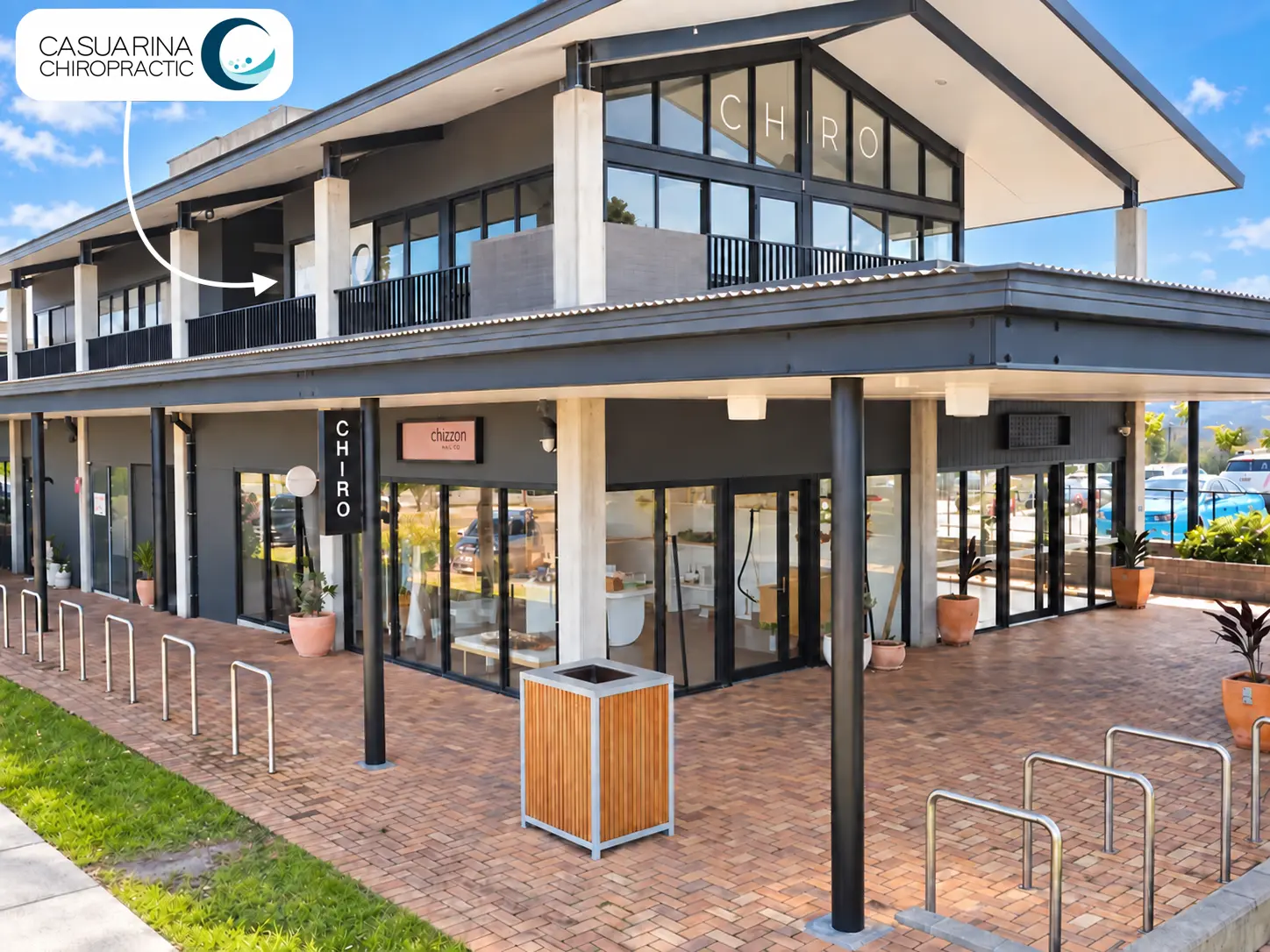
Practice entrance
The logo and arrow in the photograph mark the practice on the upper level. The practice is accessed by stairs; there is no lift or step-free access.
Please contact the team before your appointment if you would like assistance with the stairs. We will be happy to help where we can.
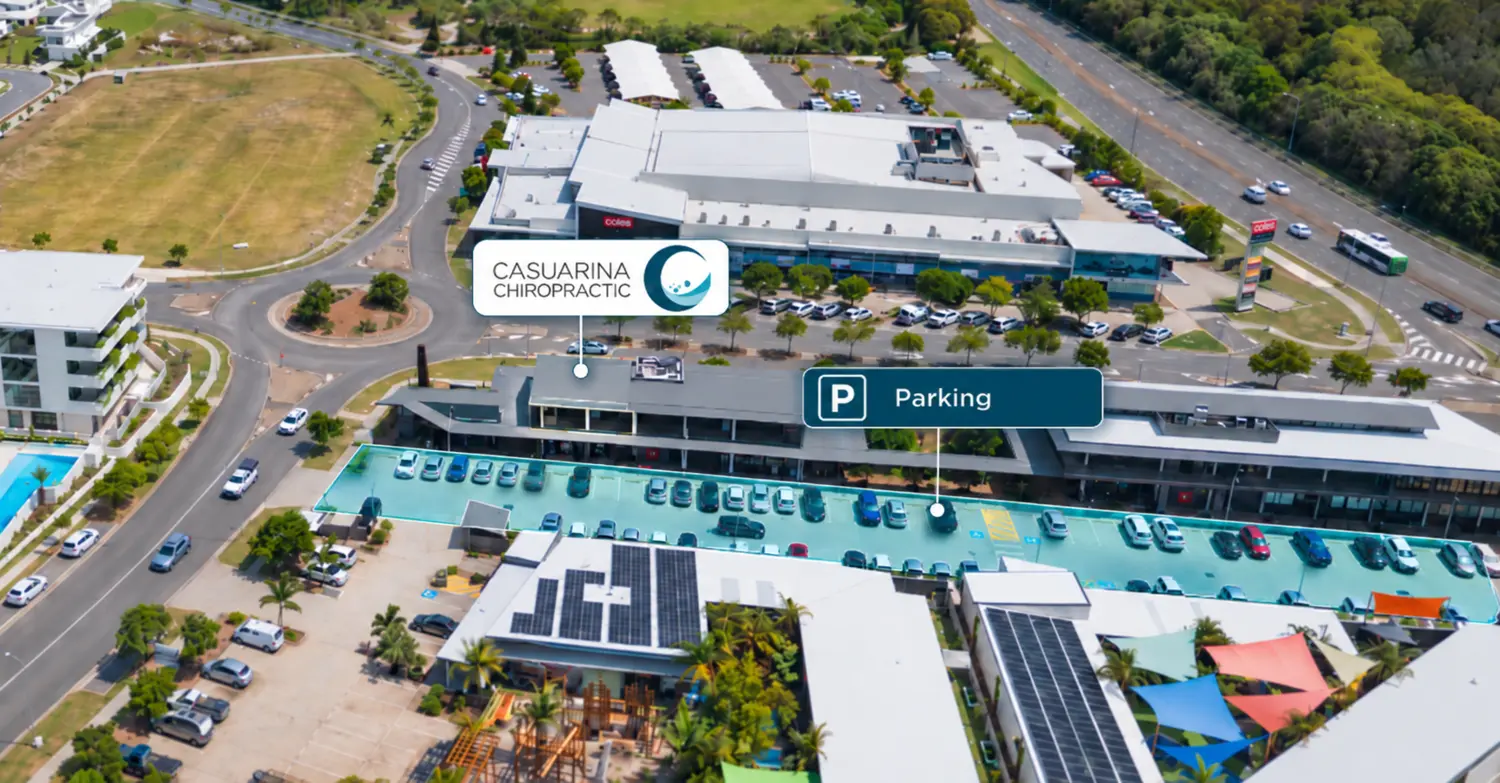
Where to park
The highlighted area shows The Commons car park at the rear of the building, accessed from Casuarina Way. Street parking is also available on Grand Parade.
Use the rear car park highlighted in the photograph or available street parking on Grand Parade. Allow a few extra minutes on your first visit to find the upstairs practice.
Complete and return your forms before your appointment so Jane has time to review them. If you cannot complete them beforehand, please arrive 15 minutes early. Tell the team about any previous spinal imaging, including when and where it was performed and the area of your spine that was imaged.
For those who like to look deeper
Our website brings together research references and summaries on non-surgical spinal decompression, including studies on pain, activity and longer-term follow-up.
Studies involve different equipment, patient groups and treatment programmes. Their findings help inform a discussion; they do not predict your individual result. Jane can discuss how the research relates to your assessment and care options.
View research references on our website ↗
Scroll to the Research section on that page.
A clearer next step
Explore whether spinal decompression is appropriate for you. Start with an assessment with Jane.
Two visits · first decompression session if appropriate · $245 total
Prefer to call? 0498 012 334If the map does not respond, use the directions button above.